




































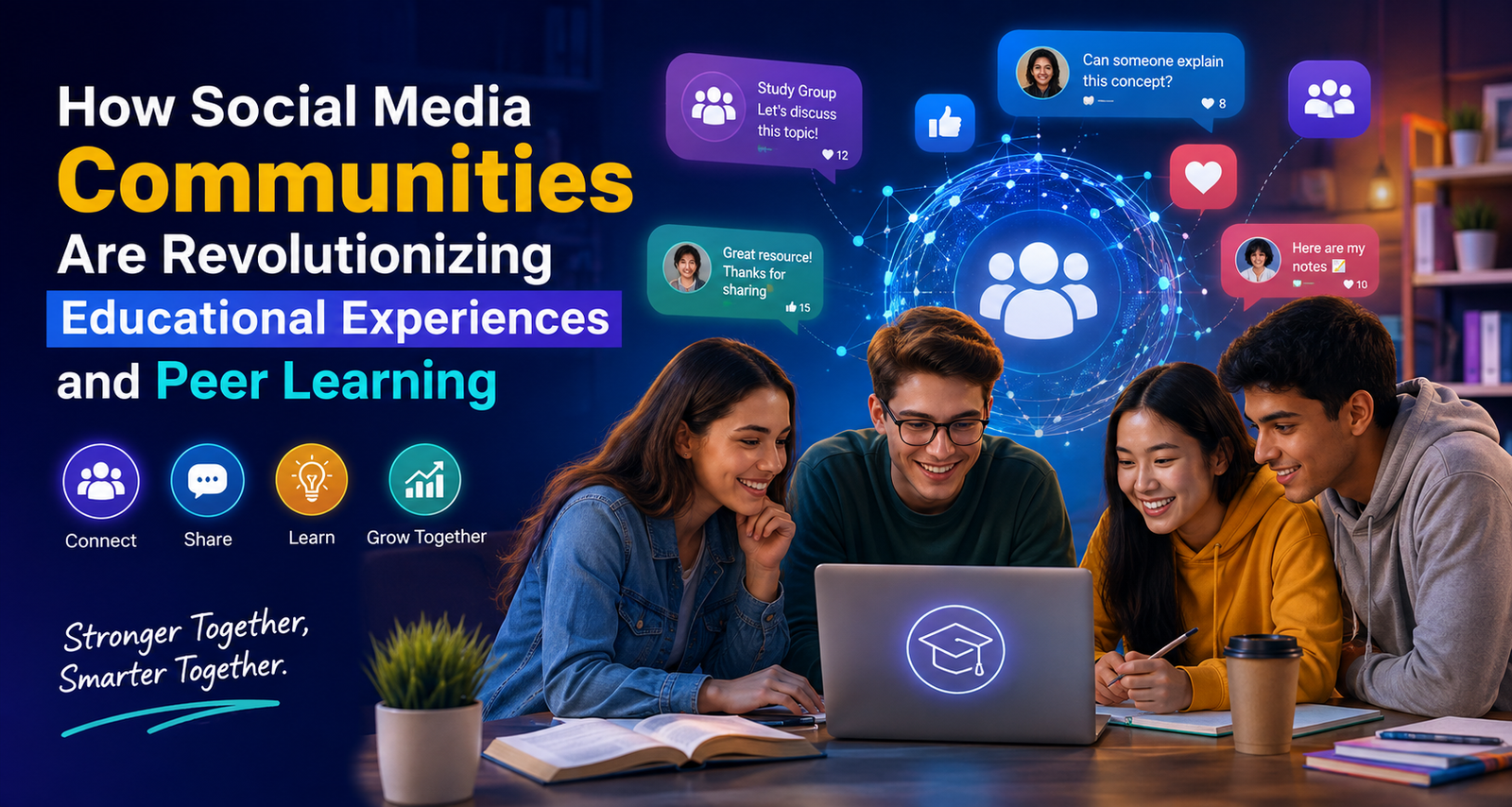
I still bear in mind the recognition that learning didn’t solely happen within the walls of a traditional classroom. I was visiting a Discord server dedicated to a coding boot camp I had signed up to, and was watching two strangers converse at 11 p.m. at night, debating their code, cracking jokes and sharing memes and explaining the concept of recursion better than anywhere I had ever heard it that week. The more I read, the more I realized that with social media, communities aren’t simply taking kids off task from homework. They have slipped into their surroundings without making a lot of fuss about it and have become one of our most powerful learning environments that we have.
The Classroom without Walls
In my schooldays, school closed at the end of the bell. If you were left out, you waited for the next class or you hoped to understand when you read the book. Now, a whole support network in a students’ pocket. Reddit posts on any given textbook, Facebook groups of parents dealing with homeschool curricula, and University-specific Discord and IRCs provide any kind of discussion about learning — it never ends.
The organic feel of all of this to me, the most striking attribute. No one set these communities up for the people. Students, that’s you and other keen learners, constructed them; and we needed a place to say, “wait, someone could tell me this in another way without me looking dumb to them in front of a professor.” When it’s a bad concept, anonymity and semi-anonymity are liberating. You can ask the “obvious” question ten ways and you’ll still get the answer that doesn’t make sense even though you weren’t asked to score.
Sometimes peer learning is a better strategy than it is sometimes
A thing that I’ve observed in these communities—peers will sometimes give better explanations than experts will. They are not necessarily less good teachers but they know just where they got stumped. They haven’t forgotten the confusion. After twenty years of teaching calculus, a professor occasionally loses his grasp of not understanding a limit. But a fellow student who cracked it two days ago! They know what specific things they used to say that helped them understand and they’re happy to impart that knowledge.
It’s the quintessential peer to peer learning made simple! Groups are now more or less like huge study groups that operate around the clock, available across platforms such as Discord, Reddit and even TikTok. A student logs a confusing homework question, and in a matter of minutes, three different solutions appear with variations in wording. Either you choose the one your brain agrees with or just the one, and then you’re out of the ruckus!
Games and participation; the social element of games
The participative aspect of the game, gamification. I’ve really learned to love this tactic as much as anyone, mixing what is common in the gaming world into people’s everyday lives with educational content. Learning is no longer complicated by boring galley studies of flash cards: study groups are now playing in the name of learning. I’ve seen Study Discords utilize random selection instruments for icebreakers or class assignments, just like you would utilize a Favorite Pokemon Picker before starting a group undertaking or an amusing talk before moving on to much more intense content. These cute whimsical details make a difference, though, when you think about them. Compromises the emotional hurdle for involvement. Once folks feel comfortable and somewhat entertained, they are much more likely to ask questions, have queries about what they are reading, and actually read and pay attention rather than simply “lurking”.
These communities are the geniuses of their undervalued genius in learning, knowing, they know better when they don’t see it as work. Even a short, light moment like having to take turns leading off a study time, makes the differences seem less significant and makes strangers feel like a group of people who share something familiar.
Creating Real Connections around Common Challenge
This has also an emotional dynamic to it that was not anticipated by me when I began. The inability to solve a subject problem by itself: being a glass half empty. When you don’t know anyone else who is struggling with the same subject, to see other people’s breakthroughs at late hours, to see each other’s small successes is a whole different thing. You want people you never met in real-life to do well in some way.You root for people that you don’t know physically. You are happy when someone finally passes a certification exam or when someone has finally “got” a concept that they couldn’t get their head around for weeks.
It is also a tactic for “flattening hierarchies” that is unusual in traditional lessons. A high schooler having difficulties with algebra can find assistance from a retired engineer who has a passion for teaching. Anything standing in the way of a student’s academic achievement will result in unsatisfactory performance.If there is anything that prevents a pupil from achieving his academic goals he is bound to perform poorly. People won’t give a shit about your credentials, as long as you can articulate an idea clearly and kindly.
This is where it’s going next
I believe we are just beginning to explore the possibilities these communities have to offer education. The boundaries between “official” learning and informal peer support continue to become more and more blurred — and clearly exciting — as more educators become engaged, not from the “authority” perspective of among-the-podium teaching, but as community members.
What I have seen over the years and participated with, is this: learning should never be a alone and sterile experience. It was always meant to be participatory, joint, somewhat sloppy, and sometimes playful. That is not a concept of their invention, it is a concept that social media communities have developed general infrastructure to make it possible for all users with internet access to use it.